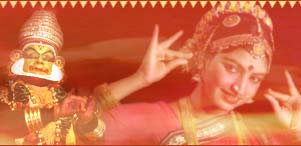
Indian traditional dances have crossed all the boundaries and today they stand above all other dances having an identity of their own. Various Indian classical dance forms represent the rich cultural heritage of our country. Indian classical dance has made its own position on the vista of globe. In ancient times, there was the tradition of temple dancing but after sometime it got an entirely new direction. The origin of these classical dance forms can be traced back to 400 B.C. At this time only, the 'Natya Shastra' was written by Bharat Muni. Indian classical dance forms have not only been admired in India but they have also gained popularity in foreign countries too. These classical dance styles have become an essential part of our culture. Every dance form represents a particular region or tribe and it depicts the music, costumes and make-up of that place. Some of the famous Indian classical dances are Bharatnatyam, Kathakali, Kuchipudi, Kathak, Manipuri, Mohiniattam and Odissi.
Classical Dances of India
Bharatnatyam
Bharatnatyam is amongst the famous Indian classical dances. This dance form is a communion of expression, melody and rhythm. The dance is accompanied by the classical Carnatic music. It has emerged as an offering to gods in temples in southern part of India. It is famous for its delicacy and perfection of movements which makes it vibrant and influential. It has been named after Bharat Muni, author of the bible of classical Indian dance called 'Natya Shastra'. More...
Kathakali
One of the most popular forms of Indian classical dances is Kathakali. It is linked with Hindu mythology. It has unique mixture of music, acting and dance. In 17th century, Kathakali emerged as a dance-drama style. In these form of Indian classical dance, emphasis is laid on costumes and facial make-up. More...
Kuchipudi
Kuchipudi is an Indian classical dance form that has its origin in Andhra Pradesh. It represents a fine combination of Natya, Nritta and Nritya. It presents the stories related to Hindu mythologies and epics. It is famous for its elegant and graceful movements and strong narrative characters.More...
Kathak
The term 'Kathak' has been derived from the Sanskrit word 'Katha', that means a story. This form of Indian classical dance originated in North India. This dance form focuses on footwork and innovative use of Bhav (expression). More...
Manipuri
Manipuri dance is one of the major classical dance forms of India. This dance evolved in the northeastern state of Manipur. Initially a part of temple procedures, Manipuri dance still retains the religious and social element in the performances. All types of Manipuri dances, whether folk or classical or modern, are devotional in nature. The people of Manipur mainly worship the Hindu deities like Radha and Krishna and even their dance portrays the mythological stories revolving around the gods and goddesses. More...
Mohiniattam
Mohiniattam dance form is a feminine dance form and it came into being during the 16th century A.D. By 19th century, it came in limelight and was encouraged by Swathi Thirunal Rama Verma, Maharaja of Trivandrumin Kerala. The Mohiniattam dance form is very sensuous, alluring and elegant. This dance is performed by women, both solo and in a group. In this dance form, gestural expressions of palms and fingers are very important. More...
Odissi
Odissi dance is one of the most popular Indian classical dances. It is one of the oldest persisting dance forms of India which originated in the state of Orissa. The dance form dates back to 2200 B.C and evidences are found in the rock caves of Khandagiri and Udayagiri, which are located in Orissa. In present time, Odissi dance is a deeply rooted and well-organized Indian classical dance form. More...